
Instagram is My Playground
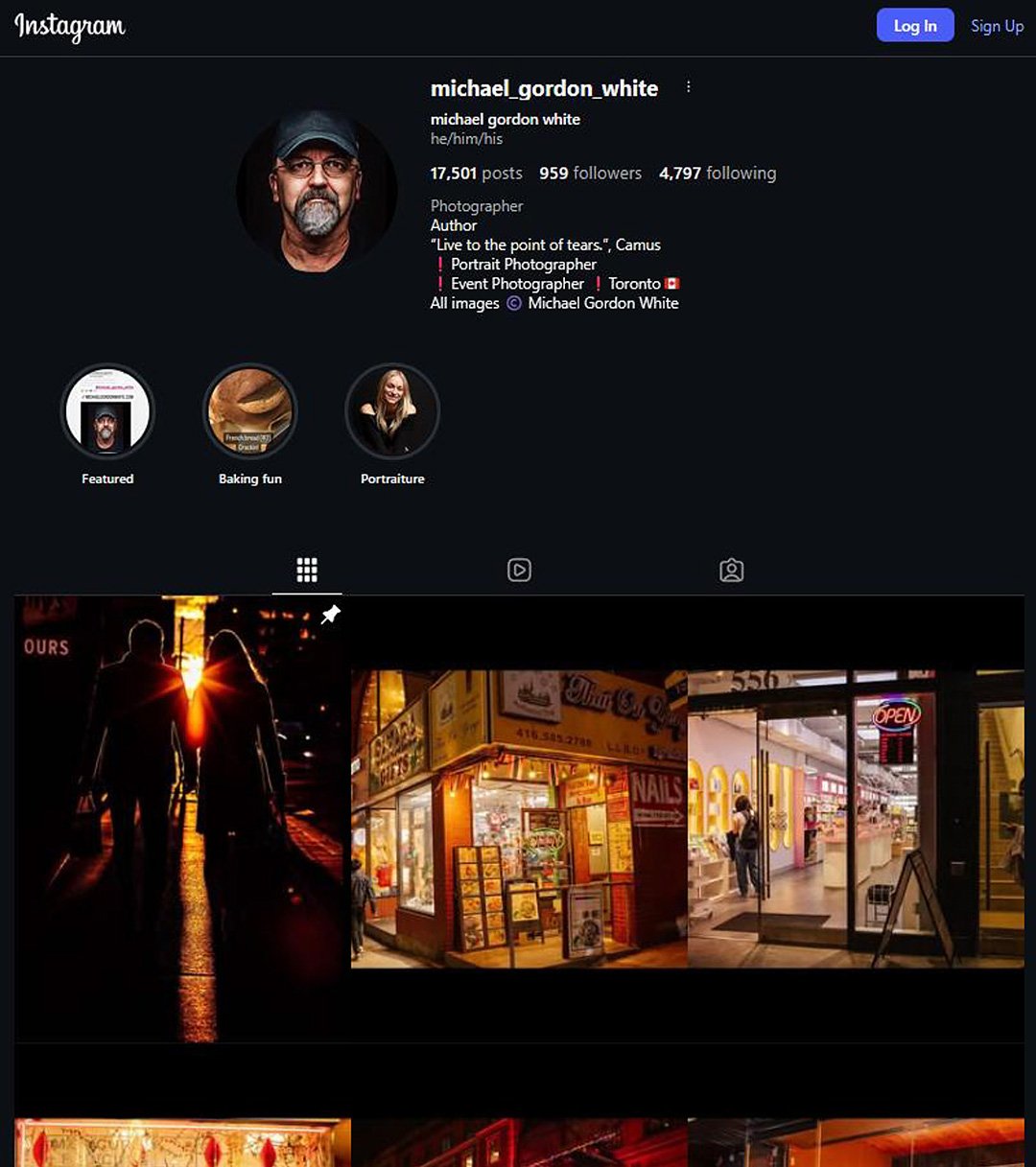
I don’t remember the date of my first Instagram post, and I have no intention of scrolling back 17,501 posts to find out. Wouldn’t it be nice if the application had a “Go back to the first Post” button? I once did scroll back and took a note, or picture of the date – but I can’t find it! But I do know this, that the first day I tried Street Photography was May 19, 2013. So, it was likely around that time of my inaugural post. Not important. What is, is that I started.
I call it my playground because I don’t take it too seriously, other than coming up with a pleasing sequence of images. Images I feel may look good together, like a monograph, but not in the classic style of having contrasting adjacent pictures; I like that they share a similar aesthetic. It may not seem so, but I do take pains to entertain. But this playground comes with a love/hate relationship.
I won’t bore you with a rant. Everyone who’s used Instagram knows Adam Mosseri likes to change things. And yes, it is annoying, but what can you do? Well, I like to stay on top of it, figure it out, and deal with the change. And, expect more updates, hopefully for the better.
I do love the social aspect of the platform, the global reach, the people you discover and their work, all exciting. However, as a photographer, and one who sees value in the photographic image, as is, it would be my wish that the algorithm would balance this with trying to become YouTube. “Keep the user on the app as long as possible, and make money” – social platform’s business motto. And for a business model, this makes sense. But as a global phenomenon for sharing creativity, all content should get equal priority. There should be balance. And yes, I’m dreaming.
A quick explanation on how my Instagram account as evolved over the years, and why.
When I first started, I was satisfied with the number of views my posts would get – and views are all that matter to me. Likes are nice, but if I were to stumble across my account, I wouldn’t likely “like” anything, knowing that if I did, I would wake up the next day and find over 100 images in my main feed, all from this strange account. And why is that? Well, one day the algorithm decided that if you post an image, it’s sent to the bottom of the priority list, and you’d be lucky if anyone sees it. What to do? Push back! Post as many images as possible in one day, right to the point of locked-account warnings (has happened many times). And rarely do I share just one image, in a particular post. They don’t like images? – well let’s add more to a single post! And so, I did, and that’s the annoying part for anyone brave enough to follow me. I’ve multiple times post a warning to my followers, to go ahead and restrict my account, so their feed will only show below ten percent of the posts I share. And if they want to see more, they can freely do so. Hopefully, a happy compromise, because I have no intention to stop posting many images. Why? If you consider in one year, 2018, I pushed the shutter button 100,000 times. I have a lot of images. And I can’t think of anything better to do with them at this time, so I might as well share them. It’s just what I do.
And why, Mike, do you always post a crop of the main image, along with this image – why not just share the full image and not the crop? Good question! A couple of reasons. And for anyone who has struggled with how Instagram loves to crush to oblivion any image you post, you’ll understand the issue. What does this mean? Instagram discards data to reduce the file size of any image uploaded. There’s no choice, because if they didn’t, the amount of storage on their servers would become unmanageable. But when this happens, the images lack detail and are not acceptable, at least to me. I had to find a way to overcome this. I go into detail in my book, People Photography, Life, and the Street, how I solved this issue (at the time of writing), but it’s dated. The goal: edit each image in such a way that the platform won’t change them – I would be in control of the final acceptable look. But, as it turned out, even after doing everything I could to edit within ‘correct’ parameters, Instagram still discarded data on my images. Let me explain. Instagram plays games as well! For a few days after you’ve shared the post, the images look fine, but then after that? They mess with it, and I could tell the quality was reduced. And yes, I’m obsessed with this, at least I was. I’m now confident my editing process is as good as I can get it. And if I want better image quality, I invite people to go to my website, where I do have control over quality.
But the other problem I have with sharing images to Instagram, is that the average edited file I create comes out to around a gigabyte in size. My camera has a 50.6-megapixel sensor – and I always record full-size RAW files for maximum future possibilities, such as creating large prints for a future gallery show! But I go through great pains to reduce the size of this file from one gigabyte to under 500 kilobytes. Ah, it hurts just to type that! But that is the reality of sharing my images on Instagram. So, a full frame uncropped image reduced to that small size typically looks terrible. The detail is gone, and there’s nothing I can do about it. Or is there? Yes! And that’s where the crop came to be part of my process. I like showing the detail of the subject, and so I creatively compose a crop from the main image. And this practice as been a valuable way to work. It’s made me look at an image and find multiple ways to compose it, a skill that can be use for various reasons. Think editorial. But please note: I photograph for me, I do not photograph for Instagram. However, I do at least compose the cropped edit for the purpose of sharing on Instagram. But if I were to ever create a large print for a gallery, it would only be of the full image. And it would be large enough to see all the detail of the subject, so there would be no need for the crop. Although, I’ve come to love the cropped compositions of many of my images, and I do think that a book presenting them will come to fruition one day.
And lastly, why do I include lyrics along with some of my images? Again, I think of Instagram as my playground – I just do what is fun for me, and hopefully for you as well. And, as I’m always listening to music as I edit, I’m always inspired to add lyrics or passages from books, or whatever comes to mind to complete the ‘story’ when viewing the image. There’s always a thought, or feeling, or expression that goes into the creation of the images. Studying human character and expression is deeply inspiring; that’s why I got into street photography. And these thoughts and feelings get baked into the edit every time. I always hear music when I view the completed image. They just go together. It’s how I work. Although I will say, I’d rather share the lyrics of a song, not the actual music. Instagram suggests music you can add to each post. But I find that annoying: scrolling along, enjoying all the shared images from everyone – then bam! a loud burst of music attached to a post! Not my game, no thank you!
I’m sure there’s more to this, but that’s it for now. And yes, I’m probably somewhat annoying to any of you who follow me, and I do apologize for that, but at least you now know some of the reasons behind it.
Thanks for your time, Mike
April 09, 2026